
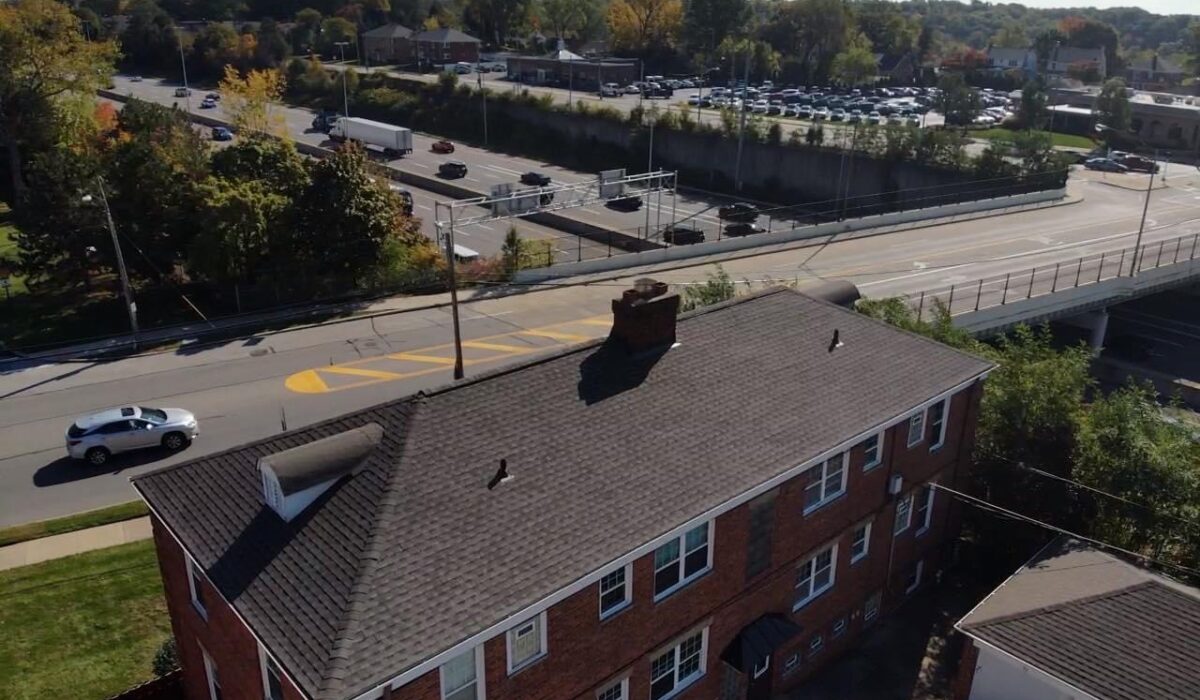
Rocky River sits right on the shore of Lake Erie, and that location makes roofs here work harder than almost anywhere else in Ohio. As a local roofing contractor, we see the aftermath of every major wind event, hailstorm, and freeze-thaw cycle that rolls through. This guide walks you through what storm damage looks like, what to do about it, and how to navigate the insurance process so your home stays protected.
Key Takeaways
- Rocky River and the greater Cleveland area regularly see wind gusts exceeding 50–70 miles per hour, lake effect snow, hail, and ice dams that can severely damage roofs, siding, and gutters.
- As a locally owned Rocky River-area roofing contractor, we offer 24/7 emergency tarping, a free inspection, and hands-on help with the entire insurance claim process.
- Hidden hail damage, lifted or creased shingles, and minor leaks can quickly turn into structural damage, mold, and costly interior repairs if not inspected within days of a storm.
- Many local companies offer complimentary roof inspections after storms-ours includes detailed photos, written findings, and a free estimate.
- Contact us now to schedule a free storm damage roof inspection so your home is ready before the next rocky river storms roll in.
How Rocky River Storms Damage Your Roof
Lake Erie doesn’t just give Rocky River its beautiful shoreline-it also feeds the intense weather systems that pound our roofs year-round. Cold air sweeping across the open lake picks up moisture and energy, generating heavy snow bands in winter and fueling severe thunderstorms in spring and summer. The Rocky River valley funnels wind between the bluffs, and exposed ridge tops along Lake Road and Detroit Road catch the worst of it.
In the past 12 months alone, 186 high-wind reports have been documented near Rocky River, with gusts reaching approximately 85 mph. Spring thunderstorms have brought 60–70 mph wind gusts that rip shingles off older roofs. In April 2026, a severe hailstorm dropped stones up to 2.5 inches in diameter across Cuyahoga County, damaging roofs from Pepper Pike to the west side. And every winter, freeze-thaw cycles create ice dams that quietly push water into attics and walls.
Homes along the lakefront and on exposed ridgelines see different wind pressures than houses tucked into the Metroparks valley or shaded side streets. But no neighborhood is immune. The most common types of storm damage we see include:
- Torn and missing shingles from high winds
- Hail bruising and granule loss on asphalt shingles
- Bent, loose, or missing flashing around chimneys and walls
- Leaks around vents, skylights, and roof penetrations
- Damage from fallen branches and flying debris
Common Types of Roof Storm Damage in Rocky River
Each weather pattern in northeast Ohio creates its own kind of roof damage, and each requires a specific repair approach. Here’s what to watch for:
- Wind damage – lifted, creased, or missing shingles
- Hail damage – bruised mats, granule loss, cracked surfaces on shingles, vents, and gutters
- Ice dams and heavy snow loads – water forced under shingles at eaves
- Water intrusion – ceiling stains, attic moisture, mold
- Impact damage – fallen limbs and flying debris punching through decking
Damaged shingles aren’t always obvious. Look for creased tabs, missing corners, exposed nail heads, and shingle edges flapping in the breeze. Hail damage often appears as small dark spots or soft bruises in the shingle surface that shorten your roof’s lifespan over time.
Wind Damage
During rocky river storms, wind gusts often exceed 50–70 miles per hour, especially along the Lake Erie shoreline and exposed ridgelines. Strong winds can tear off shingles and damage flashing, leaving your roof deck exposed to rain.
After a wind storm, homeowners typically notice:
- Scattered shingles in the yard or driveway
- Shiny or dark patches on the roof where layers are missing
- Flapping or misaligned shingles near ridges and shingle edges
Walk your property after a storm and inspect from the ground, but avoid climbing onto the roof yourself to prevent injury. Even if shingles lay back down after the wind, the adhesive seal strip may be broken-compromising waterproofing and potentially voiding manufacturer warranties.
We perform a detailed inspection of every wind crease and lifted area, documenting findings for potential insurance claims.
Hail Damage
Hailstorms that form over lake erie and roll inland toward Rocky River, Lakewood, and Fairview Park can damage roofs, siding, and gutters even when stones are only quarter-sized. Hail can cause punctures, rips, and tears in roofs that aren’t visible from the ground.
On asphalt shingles, hail creates:
- Bruising of the mat beneath the granules
- Circular “pock marks” where granules are dislodged
- Hairline cracks that only show up under close inspection
This matters because granule loss accelerates UV damage and shortens the roof’s lifespan. Cuyahoga County has recorded 127 hail reports since 2004, with the largest stones reaching 2 inches-and the April 2026 event produced even larger hail. Our hail damage inspections include close-up photos, chalk-marked impacts, and a written report ready for your insurance claim file.
Heavy Snow, Ice Dams, and Freeze–Thaw Damage
Northeast Ohio winters bring heavy snow, significant roof snow loads, and repeated freeze-thaw cycles that are especially hard on older Rocky River roofs. Heavy snow can lead to ice dams and water leaks that develop silently over weeks.
Ice dams form when warm attic air melts snow on the upper roof. The meltwater runs down and refreezes at the colder eaves, creating a dam. Ice dams can force water under shingles, causing leaks into walls, ceilings, and insulation. A February 2026 report noted that long icicles are often a warning sign of serious water backup beneath the roof surface.
Common warning signs include:
- Icicles hanging from gutters and soffits
- Water stains on ceilings or walls after a cold snap followed by a warm-up
- Peeling paint around exterior walls and window heads
We install premium materials including self-adhering ice-and-water shield membranes and ensure proper attic ventilation to meet or exceed Ohio residential building code requirements. Schedule a roof and attic ventilation check in fall to reduce your risk of ice dam damage.
What To Do Right After a Storm in Rocky River
Safety first. Stay clear of downed power lines, unstable trees, and slippery roofs. Once conditions are safe, prompt action is crucial to prevent additional water damage. Here’s your checklist for the first 24–72 hours:
- Check around your property for missing shingles and damage to windows, siding, and gutters.
- Inspect interior ceilings, attics, and upper floors for new water stains or drips.
- Document all visible damage immediately after the storm with high-resolution photos and video.
- Call a local Rocky River roofing contractor for emergency tarping if the roof is open or leaking.
- Notify your homeowners insurance company promptly to start a claim.
Homeowners should secure the property after storm damage-cover broken windows, move valuables away from active leaks, and keep debris out of walkways. Quick action can be the difference between a simple shingle repair and major interior reconstruction from ongoing leaks and mold. Fallen branches can cause significant roof damage during storms, so document those impacts as well.
We offer 24/7 emergency tarping and respond quickly with same-day service in most Rocky River and west-side neighborhoods. Avoid hiring out-of-town “storm chasers” and instead choose a locally owned, insured contractor who understands local codes and weather patterns.
Our Storm Damage Roof Repair Process in Rocky River
We use a simple, transparent process so homeowners always know what happens next:
- Free inspection and damage assessment – we walk the roof, check the attic, and examine gutters, drainage systems, and siding for associated storm damage.
- Emergency tarping and temporary dry-in – if the roof is actively leaking, we secure it immediately.
- Detailed estimate and insurance claim support – we prepare a written scope of work with photos for you and your insurance adjuster.
- Final repairs, cleanup, and documentation – once work begins, we complete the job, sweep for nails, remove debris, and walk through findings with you.
24/7 Emergency Tarping and Leak Control
Rocky River storms often hit overnight or on weekends. Emergency tarping services are available 24/7 in Rocky River, and same-day tarping is provided for storm emergencies. Rapid response teams assess storm damage immediately after events to prevent further damage.
Our emergency tarp service includes:
- Rapid on-site assessment
- Installing waterproof tarps and plastic sheeting over exposed decking
- Temporary sealing around chimneys, vents, and ridges
- Interior protection where ceilings are actively leaking
Immediate tarping can prevent further water damage after storms. Emergency services help prevent further water damage and are usually covered as part of the insurance claim when done to prevent additional damage. Keep receipts for emergency repairs as they are often reimbursable.
Detailed Wind and Hail Damage Assessment
Insurers in the greater Cleveland area require clear proof of storm-related damage versus ordinary wear. Proper documentation makes or breaks a claim. Our professional inspection includes:
- Marking hail strikes with chalk on shingles
- Measuring and photographing creased, lifted, or damaged shingles
- Checking ridge vents, box vents, pipe boots, and flashing
- Reviewing underlayment condition where exposed
We prepare an easy-to-read report with photos and repair recommendations that homeowners can share directly with an insurance adjuster. Our knowledge of local storm dates and northeast Ohio weather records helps connect roof damage to specific covered weather related events.
Quality Repairs with Premium Materials
Once the claim is approved or you decide to self-pay, we schedule the repair storm damage work using high-quality, storm-rated roofing materials. We:
- Replace damaged shingles with products matching color and profile
- Install modern ice-and-water shield in critical areas (eaves, valleys, penetrations)
- Upgrade flashing at chimneys, skylights, and wall intersections as needed
Building permits are required for roof replacements in Rocky River, and a final city inspection must be scheduled and passed to close out the permit. We handle both. Our cleanup includes a magnet sweep for nails, debris removal, and a final walkthrough with the homeowner.
Insurance Claims for Roof Storm Damage in Rocky River
Most homeowners’ insurance covers storm-related roof damage from wind, hail, and falling objects. However, insurance policies may exclude damage from wear and tear, neglect, or pre-existing conditions. Understanding the difference between roof storm damage and normal aging is important because adjusters evaluate both when reviewing a claim.
We are not public adjusters or attorneys, but as a local roofing contractor we help homeowners document damage, meet with adjusters on-site, and explain the scope of work required to properly restore the roof. Homeowners should document every point of damage for claims.
How We Help With Your Insurance Claim
Here’s how the typical insurance claim process works:
- Homeowner calls their insurance company and opens a claim after a storm.
- We provide a free inspection and preliminary report.
- The adjuster schedules a visit; we meet them on-site when requested.
- The claim is approved or adjusted and scope of work is finalized.
- We complete repairs and provide final documentation.
We take detailed, date-stamped photos and videos, reference storm dates and local weather data, and explain technical roofing issues to the adjuster in simple terms. Our goal is to ensure the scope of storm damage repair matches what is actually needed to return the roof to its pre-storm condition with code-compliant materials. We prioritize transparency-homeowners see the same photos and documentation the insurance company sees.
Deadlines, Deductibles, and Coverage Basics
Most insurers prefer claims filed within 30 to 60 days of the storm. Claims can be delayed or denied without detailed documentation. Delaying repairs can lead to further damage and claim denial.
Key terms you’ll encounter:
- Deductible – your out-of-pocket cost before coverage kicks in (some policies have separate wind/hail deductibles)
- Replacement Cost Value (RCV) – pays the full cost of new, similar materials after your deductible
- Actual Cash Value (ACV) – replacement cost minus depreciation based on roof age and condition
Roof age affects coverage. Most policies cover newer roofs at RCV, but roofs older than about 20 years may only qualify for ACV. Review your policy or call your agent to understand how your specific coverage handles wind, hail, and ice-related roof damage.
Why Choose a Locally Owned Rocky River Roofing Contractor
Local experience matters. We know Rocky River’s older housing stock, lake-effect weather patterns, and city permitting requirements. Verify that your chosen contractor is properly registered and licensed before any work begins.
Advantages of working with a local contractor:
- Respond fast during wind and hail events-our crews serve Rocky River and nearby communities like Lakewood, Bay Village, Fairview Park, Westlake, and north olmsted
- Familiarity with local storm patterns and common damage in areas like olmsted falls, middleburg heights, north royalton, and bedford heights
- Established relationships with area suppliers and inspectors
- Accountability long after the storm chasers leave town
Being locally owned means homeowners can reach us months or years later for follow-up questions, warranty concerns, or a new roof consultation.
Local Weather and Home Styles Expertise
Rocky River has classic colonials, mid-century homes, bungalows, and newer builds-many with complex rooflines, dormers, and valleys. We tailor storm damage roof repair to each roof’s architecture, ensuring proper water flow and ice protection at eaves, ridges, and wall ties.
Common trouble spots we see:
- Chimney flashings on older brick chimneys
- Low-slope sections behind second-story walls
- Gutter and fascia transitions on heavily treed streets
Our crews understand how wind funnels along Lake Road, Detroit, and the river valley, and we design repairs to handle those directional gusts. The result is improved curb appeal and a roof that performs under pressure.
Preventing Future Storm Damage to Your Rocky River Roof
Storms can’t be prevented, but homeowners can significantly reduce the risk of severe roof damage with smart upgrades and routine maintenance. We recommend a roof inspection at least twice a year-spring and fall-plus after any major wind, hail, or heavy snow event.
Practical upgrades to consider:
- Higher wind-rated shingles (ASTM D7158 Class G or H)
- Ice-and-water shield along eaves and valleys
- Improved attic ventilation and insulation to reduce ice dams
- Upgraded flashing and fasteners at known weak points
Trim overhanging trees and branches away from roofs and power lines to reduce impact risk. We offer maintenance inspections and can provide a written plan to phase in improvements if a full roof replacement isn’t needed yet.
Considering Impact-Resistant and Premium Materials
Class 4 impact-resistant shingles are designed to resist hail and debris damage common in northeast Ohio. Upgrading can, in some cases, lower insurance premiums over the life of the roof-ask your agent.
When a full replacement is paid for by an insurance claim, it’s the ideal time to discuss upgrades:
- Impact-resistant shingles
- Enhanced underlayment and ice protection
- Improved ridge vent or intake ventilation
We balance budget, aesthetics, and performance to recommend products that make sense for Rocky River’s climate and your specific property. All materials are documented for manufacturer warranty and future insurance documentation.
FAQ: Storm Damage Roof Repair in Rocky River, Ohio
Below are answers to questions we hear frequently from Rocky River homeowners beyond what’s covered above.
How soon should I schedule a roof inspection after a Rocky River storm?
Schedule a professional inspection within a few days of any storm with high winds, hail, or heavy snow-as long as conditions are safe. Early inspection catches hidden damage before it causes leaks, documents conditions close to the storm date for insurance purposes, and prevents denial based on delayed reporting. We offer prompt, free inspections in Rocky River and nearby suburbs after major weather events.
Can small leaks or a few missing shingles really wait?
No. Even a small leak or a handful of missing shingles can let water into the decking, insulation, and walls, leading to mold and structural rot. Insurers may reduce coverage if they determine that a homeowner delayed repairs and allowed further damage to develop. Treat any new leak or shingle loss after a storm as urgent and fix it promptly.
Will my insurance cover a full roof replacement or just repairs?
Coverage depends on your policy language (RCV vs. ACV), roof age and prior condition, and how widespread the storm damage is. Many Rocky River homeowners receive full roof replacement approval when damage is extensive and the adjuster agrees it’s required. We provide detailed documentation to help insurers see when replacement is more appropriate than patching.
Do I need to be home during the roof inspection or repair?
It’s helpful to be present during the initial detailed inspection to review findings, but it’s not required as long as we have exterior access. For repairs, many homeowners are at work while we protect landscaping, complete the job, and handle cleanup. We provide photo updates and a final walkthrough whether you’re on-site or not.
How long does a typical storm damage roof repair take?
Small repairs-replacing a few damaged shingles or a flashing section-often take just a few hours once scheduled. A full roof replacement on an average Rocky River home typically takes one day, with larger or more complex roofs sometimes taking two. Weather, material availability, and insurance approval timelines can impact the start date, and we communicate clearly about scheduling from the beginning.
Schedule Your Free Storm Damage Roof Inspection Today
Rocky River’s wind, hail, and winter storms can turn a small roof issue into a major repair almost overnight. Don’t wait for a ceiling stain or an active leak to tell you what a rapid response inspection would have caught weeks ago.
We are a locally owned roofing contractor serving Rocky River and the greater Cleveland area with 24/7 emergency tarping, free no-obligation roof inspections, detailed documentation for insurance claims, and premium materials installed to code. Contact us today to book your free estimate-especially if you heard shingles flapping during the last storm, see granules collecting in gutters, notice new stains on ceilings or walls, or haven’t had your roof inspected in the last year.
Schedule your free storm damage roof inspection now so your Rocky River home is protected and ready for the next lake erie storm season.